Full treatment details
You know how easy it is to reach the point where your body feels stuck: your shoulders stay braced, your jaw never quite softens, and even a good massage does not always change the deeper pattern. That is usually the moment people start looking for CranioSacral therapy, not as a trend, but as a gentler way to support pain relief, recovery, and regulation.
At Urban Rituals, we have spent years working with clients who want relief without forceful treatment. Candy Iverson founded our studio and brings nearly 15 years of experience as a licensed esthetician and massage therapist, along with CranioSacral therapy, Reiki, and movement-based bodywork training. We use light, non-invasive touch, and most clients stay fully clothed during sessions.
Below, we break down what CranioSacral therapy is, who tends to benefit most, what a session feels like, and how we blend it with other gentle bodywork for a more complete approach.
What Is CranioSacral Therapy?
CranioSacral therapy is a gentle form of manual therapy that uses light touch, usually around the head, neck, spine, and connective tissue, to ease tension and help the body shift out of a guarded state. Cleveland Clinic describes it as a noninvasive treatment that is often used alongside other care, not as a replacement for medical treatment.
That distinction matters. The goal is usually not to push through tissue resistance; it is to help your system settle enough that pain patterns, stress responses, and protective holding can start to change. The touch itself is very light. The Upledger Institute, one of the best-known CST training organizations in the United States, describes its work as using no more than about 5 grams of pressure. For clients who dislike deep pressure, feel overstimulated easily, or have a sensitive nervous system, that small detail is often the reason this work feels approachable.
- For chronic pain — light touch can be a better starting point when stronger bodywork flares symptoms.
- For stress relief — slower pacing helps the body downshift instead of brace.
- For somatic awareness — the session gives you space to notice tension patterns instead of ignoring them.
- For integrative care — CST works best as part of a bigger plan that may also include massage, Reiki, movement, rest, and medical support.
Cleveland Clinic notes that people usually remain fully clothed and that appointments commonly run around 30 to 60 minutes of hands-on work, which gives you a useful baseline for what a professional CST visit should feel like.
Who Is It For?
We work with people dealing with chronic pain, migraines, injury recovery, scar-related restriction, emotional stress, and the drained feeling that can come from living in a constant low-grade stress response. According to the CDC, about one in four U.S. adults had chronic pain in 2023, so it is no surprise that people increasingly want gentle options they can combine with other treatment rather than relying on one approach alone.
CranioSacral therapy is often a strong fit for people who want support in these areas:
- Stress relief and regulation — useful if your body feels wired, restless, or hard to settle.
- Pain management — especially when neck tension, jaw tension, headaches, or old injuries keep returning.
- Emotional release — helpful for clients who notice that stress shows up physically in breath, posture, or sleep.
- Recovery support — a gentle option when you want bodywork but deep pressure feels like too much.
We stay grounded about the evidence. A 2024 systematic review found that support for CST remains mixed across conditions, which is why we frame this work as supportive care for the nervous system, pain, and body awareness, not as a cure-all. If you have a complex medical condition, recent concussion, aneurysm risk, blood clot concerns, or rising spinal fluid pressure, medical clearance comes first.
What to Expect
We keep sessions calm, clear, and easy to follow. If you are new to CranioSacral therapy, you should not have to guess what is happening or why we are using a certain hold, pause, or movement cue.
A session usually follows a simple rhythm:
- Arrival and intake — we review pain points, stress load, scars, sleep, and goals, which helps us choose the right pace and level of touch.
- Regulation phase — we use breathing, grounding, and quiet contact to signal safety before deeper bodywork begins.
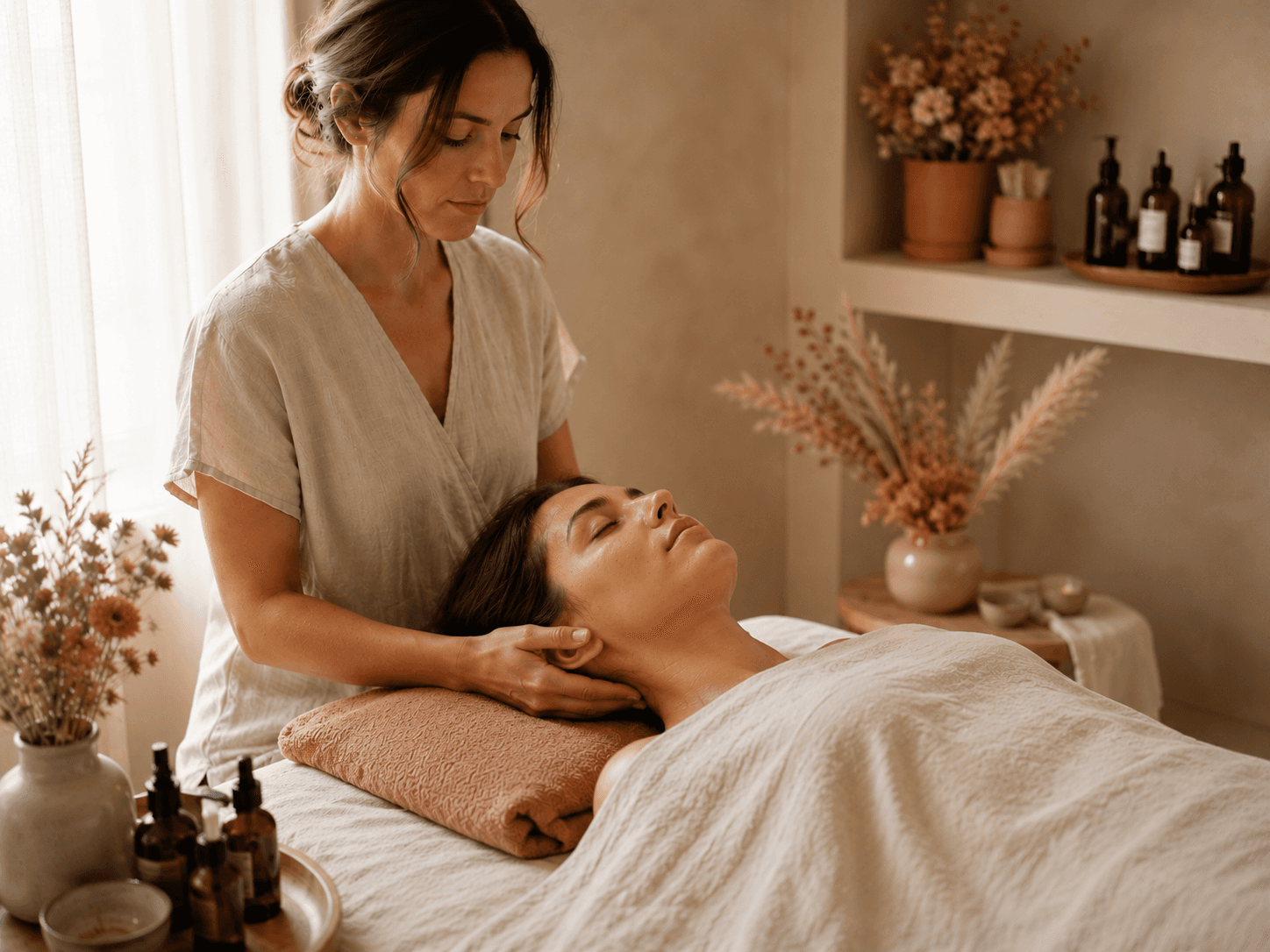
- Hands-on CST — we apply light touch at the head, neck, sacrum, jaw, or other key areas to support relaxation and help reduce holding patterns.
- Movement integration — we add simple, gentle movement when it helps the body keep the change instead of snapping back.
- Closing plan — we share one or two realistic home practices so the session is easier to build on between visits.
Clients stay fully clothed while we use gentle hands-on or hands-off contact, and we explain what we are doing as we go, because clear communication helps the body relax instead of brace. Most people notice the biggest difference when the session feels specific to them: a client with jaw clenching and headaches usually needs a different pace than someone coming in for scar restriction, anxiety, or post-treatment fatigue.
Benefits & Results
The main reason people book CranioSacral therapy is simple: they want to feel more like themselves again. In practice, that often means less pain, better relaxation, steadier energy, easier breathing, and a nervous system that does not stay stuck in high alert. For many clients, the first win is not dramatic. It is sleeping better, unclenching the jaw, or realizing their shoulders finally dropped.
Research gives a similar, measured message. A 2019 systematic review reported modest benefits for some chronic pain outcomes, while a 2024 review found mixed evidence across musculoskeletal conditions. The practical takeaway is that CST can be worthwhile for symptom support and relaxation, but it works best when you treat it as one part of a broader healing plan. That is exactly why we blend methods instead of relying on a single tool:
- CranioSacral therapy helps calm the system with subtle touch.
- Gentle movement work helps improve how you move in daily life and rebuild body awareness.
- Reiki and restorative touch support relaxation and nervous system regulation.
- Holistic skincare and bodywork let us address the visible signs of strain as well as the internal drivers behind them.
Skin flare-ups, tension headaches, shallow breathing, and persistent fatigue often travel together, so we make room for the whole picture. We always set expectations carefully: the best outcomes usually come from consistency, good pacing, and the right combination of modalities.
Why Urban Rituals
CranioSacral work rewards a practitioner who can read more than one system at a time. Candy is dual-licensed as an esthetician and massage therapist with nearly 15 years of experience, and she also practices as a Reiki Master and CranioSacral therapist, which lets us connect skin stress, muscle guarding, sleep quality, and nervous system load in a single plan.
We offer calm, trauma-informed sessions and pair CranioSacral therapy with holistic skincare and bodywork when it fits your goals. Our studio at 3333 Midway Drive #104 is set up for quiet, unrushed, one-on-one care that respects your limits while still moving your body toward change.
Pricing & Booking
Our CranioSacral therapy session is $150 for a 75-minute visit. Book online through the Vagaro scheduler, or call the studio if you would like help choosing.
- CranioSacral Therapy — $150 · 75 min
- Want to combine gentle bodywork? See our energy work and massage menus.
Urban Rituals · 3333 Midway Drive #104, San Diego, CA 92110 · (619) 786-6159