
How to Read a Skincare Label Without the Fear-Mongering
A long ingredient list isn't a threat. Here's how we read a skincare label — ingredient order, the 1% rule, the symbols that matter, and the fragrance and preservative triggers reactive skin should watch for.
 Candy IversonOwner & Licensed Aesthetician
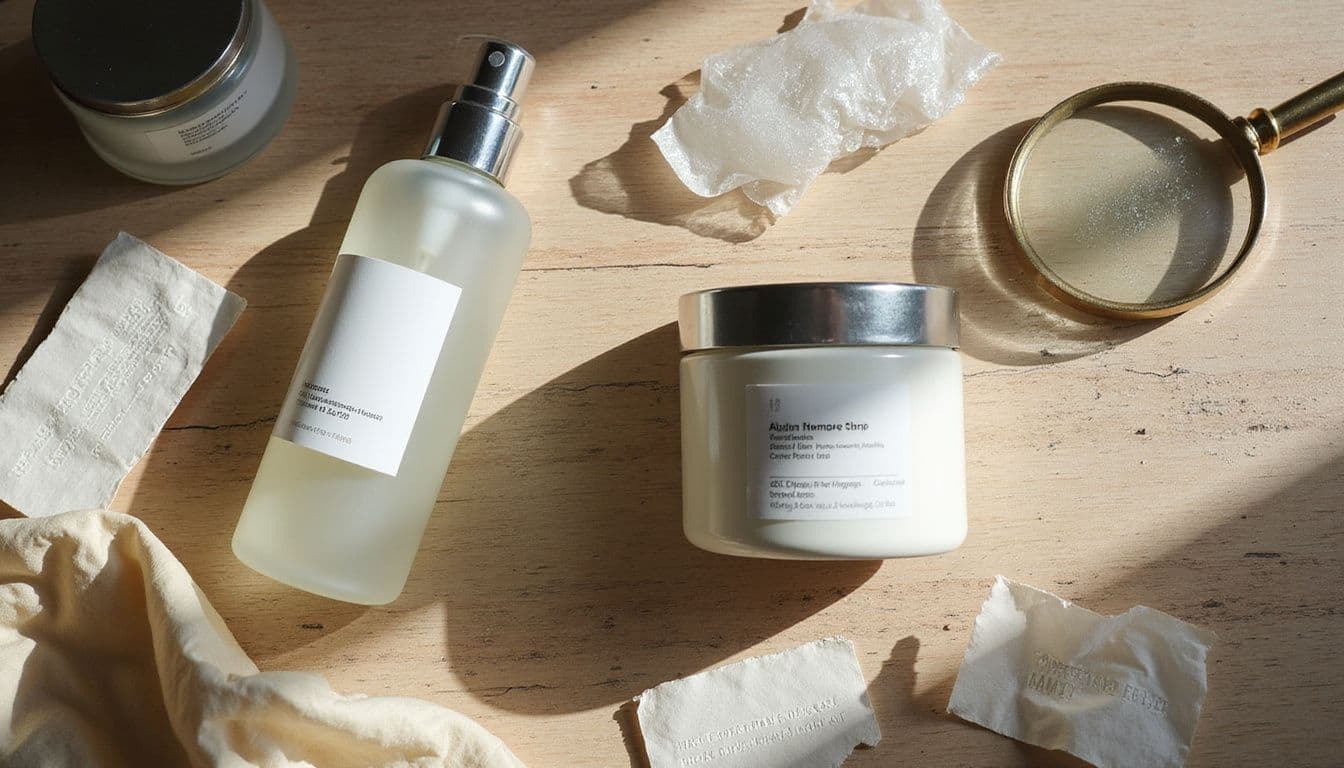
You know how one skincare label can sound soothing on the front and slightly alarming on the back? That is exactly why it helps to read a skincare label calmly, without the fear-mongering.
At Urban Rituals, our founder Candy Iverson has spent nearly 15 years as a licensed esthetician and massage therapist testing formulas on real skin, especially sensitive skin. We keep seeing the same pattern: people skip products that could work beautifully for them because a long ingredient list looks harsher than it really is.
The useful shift is simple. A label is not there to scare you, it is there to tell you what is actually in the formula, what shows up in meaningful amounts, and where marketing starts to outrun the facts.
So we are going to read the INCI list, sort signal from noise, decode the symbols that matter, and show you how to spot ingredients that deserve extra care if your skin reacts easily.
Keep reading.
Key Takeaways
- Start with the back label. In the U.S., cosmetic ingredients are listed in descending order of predominance, so the top of the list usually tells you what the product is mostly made of.
- Use the 1% rule wisely. Once ingredients drop below 1%, they can appear in any order, which is why a hero ingredient near the bottom may be more about marketing than results.
- Treat front-label claims as clues, not proof. Terms like clean, hypoallergenic, natural, and nontoxic do not automatically tell you how gentle or effective a product will be.
- Watch fragrance closely if your skin is reactive. Fragrance, essential oils, limonene, linalool, and some preservatives are common reasons a product that looks gentle still stings or flares skin.
- Use databases as translators, not judges. Tools like INCI Decoder, EWG, SkinSAFE, and official INCI resources can help, but the bottle in your hand should always win if an online list conflicts with the packaging.
Start with the ingredient list (INCI)
We start with the INCI ingredient list, because that is where the formula stops performing and starts telling the truth. Under FDA labeling rules in the U.S., cosmetic ingredients are listed in descending order of predominance, with ingredients at 1% or less allowed to appear in any order after the higher-level ingredients.
That one rule gives you a fast read on texture, formula style, and whether the ingredient getting all the attention on the front is actually doing heavy lifting.
Understand ingredient order by concentration
The first five to seven ingredients usually tell you what the product is built to do. In practice, that top section often reveals whether you are holding a water-gel, a silicone-smoothing serum, an oil-rich balm, or a barrier cream.
When we scan a label, we want the top of the list to match the promise on the bottle. If a moisturizer leads with water, glycerin, and fatty alcohols, that makes sense. If a glow serum is selling vitamin C but the top of the list is mostly water, silicones, and fragrance, we slow down and ask harder questions.
Read the INCI to judge the formula. Use the front label only to learn what the brand wants you to notice.
- Water, glycerin, aloe, or propanediol near the top: expect hydration and slip.
- Petrolatum, shea butter, squalane, or plant oils high on the list: expect richer barrier support.
- Dimethicone near the top: expect a smoother, more cushioned feel, which many reactive skin types actually tolerate well.
- Niacinamide, urea, or exfoliating acids high in the list: expect those actives to shape performance more directly.
One extra detail many shoppers miss: if the product is also an over-the-counter drug, like a sunscreen or acne treatment, the active ingredients may appear in a separate Drug Facts panel first. In those cases, read both sections, not just the cosmetic ingredient deck.
The "less than 1%" rule for minor ingredients
This is where labels get tricky. After the formula drops below 1%, brands can list those remaining ingredients in any order, so the bottom third of the label is more like a cluster than a ranking.
That matters because small-dose ingredients can still matter a lot. Retinol, peptides, preservatives, fragrance blends, and soothing extracts often live lower in the list. Some are effective at low levels. Others are present mostly to support marketing or shelf stability.
- If a hero ingredient is last or close to last: treat it as a supporting ingredient, not the whole reason to buy.
- If fragrance, parfum, or essential oils appear low in the list: they may still be enough to bother sensitive skin.
- If the label is very long: do not panic. Long lists often reflect emulsifiers, preservatives, pH adjusters, and texture agents, not danger.
- If a scary name appears low: check function before you judge it. Many low-level ingredients are there to keep the product safe and stable.
We also like to translate intimidating names into plain English. Tocopherol is vitamin E. Ascorbic acid is vitamin C. Caprylic/capric triglyceride is a lightweight emollient often derived from coconut or palm. Once you learn a few of those swaps, labels stop feeling hostile very quickly.
Recognizing Misleading Marketing Claims
This is where fear-mongering usually starts. The front label often sells a feeling, while the back label gives you the facts.
In the U.S., FDA has not defined "natural" for cosmetics, and the agency says there is no specific regulation governing the term "hypoallergenic." That means those words may sound reassuring, but they do not guarantee lower irritation risk or better performance.
Beware of exaggerated product names
Words like clean, nontoxic, pure, hypoallergenic, and dermatologist tested can sound definitive even when they are not. A name can suggest safety, healing, or clinical rigor without telling you what was tested, how much was tested, or which ingredients are actually inside.
| Front Claim | What It May Mean | What to Check Instead |
|---|---|---|
| Clean | A brand or retailer standard, not a single legal standard | Look for the actual preservative system, fragrance, and active ingredients |
| Hypoallergenic | A marketing claim, not a promise of zero reactions | Check for fragrance, essential oils, and known personal triggers |
| Natural | May refer to source, not gentleness | Review the full formula, especially fragrant plant oils and extracts |
| Nontoxic | Usually a mood-setting phrase, not a measurable safety standard | Ask whether the product is properly labeled, stable, and suitable for your skin |
Clean
- What It May Mean
- A brand or retailer standard, not a single legal standard
- What to Check Instead
- Look for the actual preservative system, fragrance, and active ingredients
Hypoallergenic
- What It May Mean
- A marketing claim, not a promise of zero reactions
- What to Check Instead
- Check for fragrance, essential oils, and known personal triggers
Natural
- What It May Mean
- May refer to source, not gentleness
- What to Check Instead
- Review the full formula, especially fragrant plant oils and extracts
Nontoxic
- What It May Mean
- Usually a mood-setting phrase, not a measurable safety standard
- What to Check Instead
- Ask whether the product is properly labeled, stable, and suitable for your skin
We see a lot of holistic shoppers get tripped up here because plant-based language feels safer. Sometimes it is. Sometimes it is just prettier copy. Citrus oils, peppermint, lavender, and tea tree can still irritate a fragile skin barrier, even though they sound gentle.
Ignore the front; focus on the back
The back label gives you far more decision-making power than the front ever will. Once you stop treating packaging as proof, the whole shopping process gets quieter.
- Find the real active. If the ingredient you want is buried near the bottom, lower your expectations.
- Scan for your triggers. Fragrance, parfum, essential oils, and preservative allergens matter more than brand language.
- Look for formula logic. A rich cream should read like a rich cream, and a calming serum should not be packed with obvious irritants.
- Use claims as prompts. If the front says barrier repair, hydration, or brightening, the ingredient list should show you how.
FTC guidance is useful here too: health-related claims in marketing are supposed to be truthful and backed by evidence. That is a good standard for us as shoppers. If the package makes a big promise, the ingredients should help explain it.
Decoding Common Symbols
Symbols can help, but only if you know which ones carry real meaning and which ones are just visual reassurance. We use them as supporting clues, not the final word.
Official symbols: Expiry date, recyclable, certifications
FDA also notes that U.S. cosmetic labels generally do not have to print expiration dates, so a date or shelf-life symbol is helpful when you see it, but its absence is not unusual. Products that are also over-the-counter drugs, such as sunscreens and many acne treatments, are a different story and often do carry expiration dating that matters.
| Symbol | What It Means | Quick Tip |
|---|---|---|
| Expiry Date | A printed month and year or full date telling you how long the unopened product should keep its quality | If you see one on a sunscreen, acne treatment, or active serum, take it seriously and do not buy old stock |
| Period After Opening (PAO) | An open-jar icon such as 6M, 12M, or 24M showing how many months the product is intended to stay usable after opening | Write the open date on the bottom of the bottle if you tend to keep products for a long time |
| Recycling Symbol | The package may be recyclable, or parts of it may fit local recycling streams | Check your local rules, because pumps, mirrors, and mixed materials often get treated differently |
| USDA Organic Seal | A certified organic claim tied to USDA standards for eligible agricultural ingredients | Useful if ingredient sourcing matters to you, but still read the full formula for fragrance and irritants |
| Leaping Bunny | A recognized third-party cruelty-free certification with a stricter verification process than a simple bunny graphic | Look for the actual certification mark, not just animal-friendly language |
| National Eczema Association Seal | A mark used on products screened for eczema and sensitive-skin considerations | This one can be especially helpful for reactive skin because seal products cannot include fragrance, UV absorbers, or formaldehyde releasers |
Expiry Date
- What It Means
- A printed month and year or full date telling you how long the unopened product should keep its quality
- Quick Tip
- If you see one on a sunscreen, acne treatment, or active serum, take it seriously and do not buy old stock
Period After Opening (PAO)
- What It Means
- An open-jar icon such as 6M, 12M, or 24M showing how many months the product is intended to stay usable after opening
- Quick Tip
- Write the open date on the bottom of the bottle if you tend to keep products for a long time
Recycling Symbol
- What It Means
- The package may be recyclable, or parts of it may fit local recycling streams
- Quick Tip
- Check your local rules, because pumps, mirrors, and mixed materials often get treated differently
USDA Organic Seal
- What It Means
- A certified organic claim tied to USDA standards for eligible agricultural ingredients
- Quick Tip
- Useful if ingredient sourcing matters to you, but still read the full formula for fragrance and irritants
Leaping Bunny
- What It Means
- A recognized third-party cruelty-free certification with a stricter verification process than a simple bunny graphic
- Quick Tip
- Look for the actual certification mark, not just animal-friendly language
National Eczema Association Seal
- What It Means
- A mark used on products screened for eczema and sensitive-skin considerations
- Quick Tip
- This one can be especially helpful for reactive skin because seal products cannot include fragrance, UV absorbers, or formaldehyde releasers
A quick shelf-check works well in stores. First, look for an expiration date if the product contains UV filters, acne actives, or unstable antioxidants. Next, find the PAO jar icon. Then check whether any certification mark is specific and recognizable, or just decorative.
Non-official symbols and what they mean
Leaf icons, lab flasks, soft green color palettes, and tiny custom badges can make a label feel safer than it is. They may reflect a brand philosophy, but they are not the same as a regulated date, an ingredient list, or a third-party certification.
- "Dermatologist tested" does not tell you what was tested, how many people were involved, or what the result was.
- "Clinically proven" should make you look for the actual active ingredients and claims, not relax automatically.
- Homemade-looking or incomplete labels are a real caution sign, especially if the ingredient list is missing or unclear.
- Custom brand icons can still be useful as brand shorthand, but they should never outweigh the ingredient deck.
When a symbol is vague, we go right back to the same question: what is actually in the formula, and is that a fit for our skin?
Identifying Common Ingredient Red Flags
This is the section where we stay grounded. A long chemical name is not a red flag by itself. A mismatch between your skin and the formula is the real issue.
Synthetic disguises and hidden chemicals
Some of the safest, most boringly useful skincare ingredients sound the scariest on paper. That is because chemistry names describe structure, not danger.
| INCI Name | What It Usually Is | Why It Matters |
|---|---|---|
| Cetyl Alcohol | A fatty alcohol | Usually softens skin and thickens creams, it is not the same as drying alcohol |
| Tocopherol | Vitamin E | Often used as an antioxidant to support formula stability and skin feel |
| Ascorbic Acid | Vitamin C | A brightening active that can be helpful, but may sting at effective strengths |
| Dimethicone | A silicone | Creates slip and helps reduce moisture loss, which many compromised barriers appreciate |
| Phenoxyethanol | A preservative | Helps keep water-based products from growing microbes, which is often safer than an under-preserved formula |
Cetyl Alcohol
- What It Usually Is
- A fatty alcohol
- Why It Matters
- Usually softens skin and thickens creams, it is not the same as drying alcohol
Tocopherol
- What It Usually Is
- Vitamin E
- Why It Matters
- Often used as an antioxidant to support formula stability and skin feel
Ascorbic Acid
- What It Usually Is
- Vitamin C
- Why It Matters
- A brightening active that can be helpful, but may sting at effective strengths
Dimethicone
- What It Usually Is
- A silicone
- Why It Matters
- Creates slip and helps reduce moisture loss, which many compromised barriers appreciate
Phenoxyethanol
- What It Usually Is
- A preservative
- Why It Matters
- Helps keep water-based products from growing microbes, which is often safer than an under-preserved formula
What deserves more caution is poor labeling, not just complex naming. FDA warns consumers to avoid skin products with handmade labels, labels in languages other than English only, or no label at all, especially in categories like skin-lightening creams where illegal mercury or hydroquinone exposure has been a real concern.
We use tools like EWG's Skin Deep and INCI Decoder as translation aids. They can help you identify what an ingredient does, but we still come back to concentration, skin history, and the product label in front of us.
Allergens and irritants to watch out for
The North American Contact Dermatitis Group's patch-test findings keep this practical: hydroperoxides of linalool are among the most common positive allergens, and methylisothiazolinone remains a frequent trigger as well. That helps explain why some beautifully scented or "natural" products still flare sensitive skin.
The American Academy of Dermatology gives a simple rule we use often: if fragrance is a trigger for you, choose fragrance-free, not just unscented. Unscented products can still contain masking fragrance ingredients.
- Fragrance or parfum: one of the first things we check when skin is reactive, itchy, or healing from overuse of actives.
- Limonene and linalool: common fragrance components that deserve more caution if you already know you react to scented products.
- Strong essential oils: peppermint, citrus, eucalyptus, and tea tree can feel fresh but still irritate a compromised barrier.
- Methylisothiazolinone or methylchloroisothiazolinone: preservatives worth noting if you have a history of contact allergy.
- High-strength acids or retinoids: not "toxic," but very capable of causing burning, peeling, or rebound sensitivity when the barrier is already stressed.
If you are unsure, patch test before committing. Dermatologists advise applying the product to a small area twice daily for seven to ten days, then moving forward only if your skin stays calm.
The goal is not to avoid every unfamiliar ingredient. The goal is to spot the few ingredients that matter most for your skin.
Resources for Better Ingredient Literacy
Good tools can make labels feel much more readable. We like resources that translate scientific naming, flag known allergens, and help you compare products without feeding panic.
Tools and databases to understand scientific names
The official INCI resource from the Personal Care Products Council is useful when you want the standardized name of an ingredient. From there, we use plain-language databases to understand function, common concerns, and where an ingredient tends to show up in formulas.
One caution matters here: one analysis found that a large share of online ingredient lists didn't match the in-store label. So use databases to translate, but let the bottle in your hand be the final answer.
| Tool | Best Use | Watch-Out |
|---|---|---|
| INCI Decoder | Plain-English ingredient functions and quick label breakdowns | Helpful for context, but it does not replace concentration data from the actual label |
| EWG Skin Deep | Quick screening and ingredient lookups | Useful as a starting point, but not every score reflects your skin, the dose, or the full formula |
| SkinSAFE | Allergen-focused searches for people avoiding known triggers | Always compare the result with the current product packaging |
| CAMP | Guided avoidance lists for patients working from patch-test results | Best used with a clinician if you have confirmed allergic contact dermatitis |
INCI Decoder
- Best Use
- Plain-English ingredient functions and quick label breakdowns
- Watch-Out
- Helpful for context, but it does not replace concentration data from the actual label
EWG Skin Deep
- Best Use
- Quick screening and ingredient lookups
- Watch-Out
- Useful as a starting point, but not every score reflects your skin, the dose, or the full formula
SkinSAFE
- Best Use
- Allergen-focused searches for people avoiding known triggers
- Watch-Out
- Always compare the result with the current product packaging
CAMP
- Best Use
- Guided avoidance lists for patients working from patch-test results
- Watch-Out
- Best used with a clinician if you have confirmed allergic contact dermatitis
Tips for navigating complex ingredient lists
You do not need to memorize cosmetic chemistry to make better choices. A short routine works better than a perfect memory.
- Start with the top five ingredients. They usually tell you the texture and the core formula type.
- Find the active you care about. If brightening, barrier support, or exfoliation is the goal, make sure the label supports that promise.
- Scan for your personal triggers. For many people that means fragrance, essential oils, or a preservative they already know they do not tolerate.
- Check shelf-life clues. Dates, PAO symbols, and packaging style matter more with unstable actives and products you use slowly.
- Patch test before full use. This matters even more if your skin is healing, sensitized, or already running hot from acids or retinoids.
- Let the bottle win. If the retailer page, database, and box all disagree, trust the current product label in your hand.
For holistic skincare, this matters even more. When your goal is a calmer barrier, steadier nervous system, and fewer surprise reactions, simple label literacy saves you from chasing products that sound healing but are built in a way your skin does not actually enjoy.
The bottom line
We read labels with calm, not suspicion. Reading a skincare label without the fear-mongering comes down to a few steady habits: check ingredient order, respect the 1% line, notice shelf-life clues, and watch fragrance and known triggers if your skin is reactive.
Use the bottle as your source of truth, then use tools like INCI Decoder and EWG for translation. With a little label literacy, your skincare routine gets simpler, safer, and much more empowering.
Frequently asked
What should I look for first on a skincare label?
How do I spot fear-mongering or vague claims?
How can I tell if a product fits my skin type?
What label details show safety and shelf life?

Written by
Candy IversonOwner & Licensed Aesthetician
Candy Iverson is a California-licensed esthetician and energy practitioner in San Diego, with 17+ years hands-on in the treatment room.

Practitioner-tested skincare, in your inbox
Honest reviews, clean-ingredient guides, and simple rituals from the treatment room. No hype, no spam.